
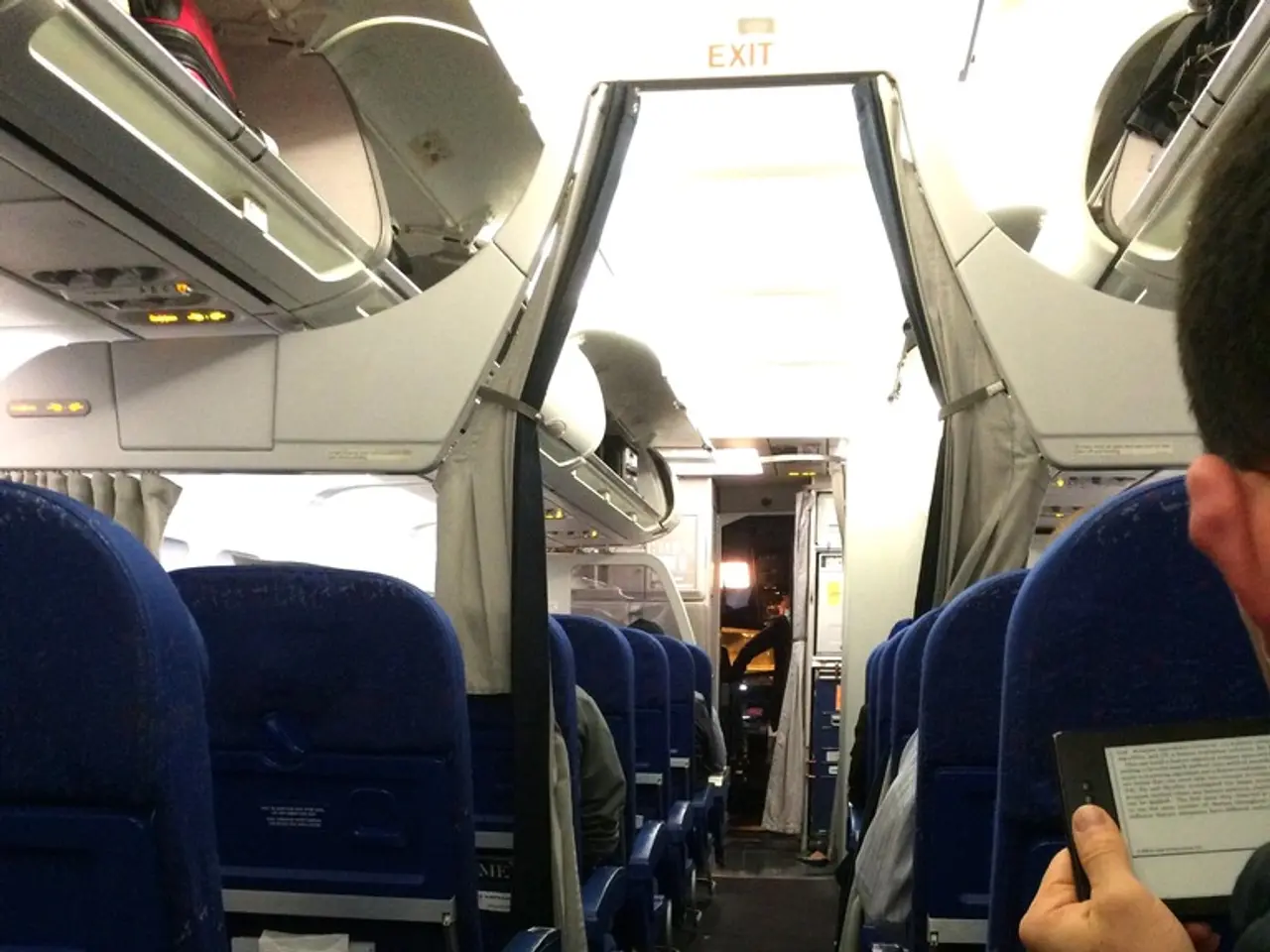
Reduced Illumination during Takeoff and Touchdown: Unveiling the Grounds behind Airplane Cabin Dimness during Flight Stages
Airplane Cabin Darkness Explained: Not Just for Drama
Wondered why the airplane cabin goes dark during takeoff and landing? Well, there's more to it than just setting the mood. Here's the real deal behind those dimmed lights.
Eyes Adjusting to the DarkEver imagined fumbling around in the dark, trying to find exits during an emergency? Yeah, not a good idea! By dimming the lights, the cabin prepares passengers for an instant plunge into darkness, should a power outage or other emergency occur. Keeping everyone's eyes ready for a dark situation contributes to a smoother evacuation in critical moments.
Pilots Need Clear VisionHave you ever noticed how the pilot'svision is crucial during takeoff and landing? With the outside lights playing a significant role, it's essential that the cabin’s glow doesn’t disturb their view. Glaring lights can make it difficult for the pilots to spot runway lights and potential obstacles, impacting the overall safety of the flight. A little darkness can make a big difference in their vision.
Evacuations Made EasierIn an emergency, finding the nearest exit can save lives. By dimming the lights, emergency exits are more visible, thanks to floor lighting and glow-in-the-dark markings. This guides passengers smoothly during an evacuation, without any fumbling around in the dark.
Energy SavingsBesides safety, dimming the lights during takeoff and landing also helps save some fuel. Keeping all those cabin lights on during critical phases consumes a lot of energy. By turning them down a notch, airlines can reduce fuel consumption, contributing to greener flights all around.
So the next time you're on a plane and the lights go out, remember it's not just a mood setter. It's a calculated safety measure ensuring every passenger and crew member has a clear view of a smooth journey.
Insights
- Safety and Vision Adaptation
- Dimmed or off cabin lights help passengers’ eyes adjust to the outside ambient light for safer evacuations in dark or smoke-filled conditions.
- Passengers can focus better on safety instructions and reduce glare from cabin lights.
- The dimmed lights also help pilots and crew maintain external visibility during critical flight phases.
- Energy Efficiency
- Turning off or dimming cabin lights saves electrical power, contributing to overall energy management on the aircraft.
- While power saving isn’t the primary concern, it’s a helpful bonus for airlines during critical flight phases.
Reference
[1] myflyright. (2021, July 5). Why do the lights go out in an airplane during takeoff and landing?https://simpleflying.com/the-reason-why-plane-lights-are-dimmed-during-takeoff-and-landing/[2] NDTV. (2020, July 2). Why Planes Turn Lights Off For Takeoff And Landing.https://www.cntraveler.com/story/the-real-Reason-planes-dim-the-lights-during-takeoff-and-landing/
During critical flight phases, dimming the airplane cabin lights ensures passengers' vision adapts for safer evacuations in dark or smoke-filled conditions. Moreover, these dimmed lights help pilots and crew maintain external visibility, crucial for a smooth journey.